
[NOTE: I have links to the journal’s website in the essay — some are paywalled – but here is a pdf for the complete collection.]
I am delighted to see published my edited collection of essays, “Reading Nature’s Archives” in the September 2026 issue of the American Historical Review, for U.S.-based historians this is one of our oldest and top journals. I’m especially delighted with their use of the cover image that I found with help from Ryan Tucker-Jones who has co-authored a piece in the collection.
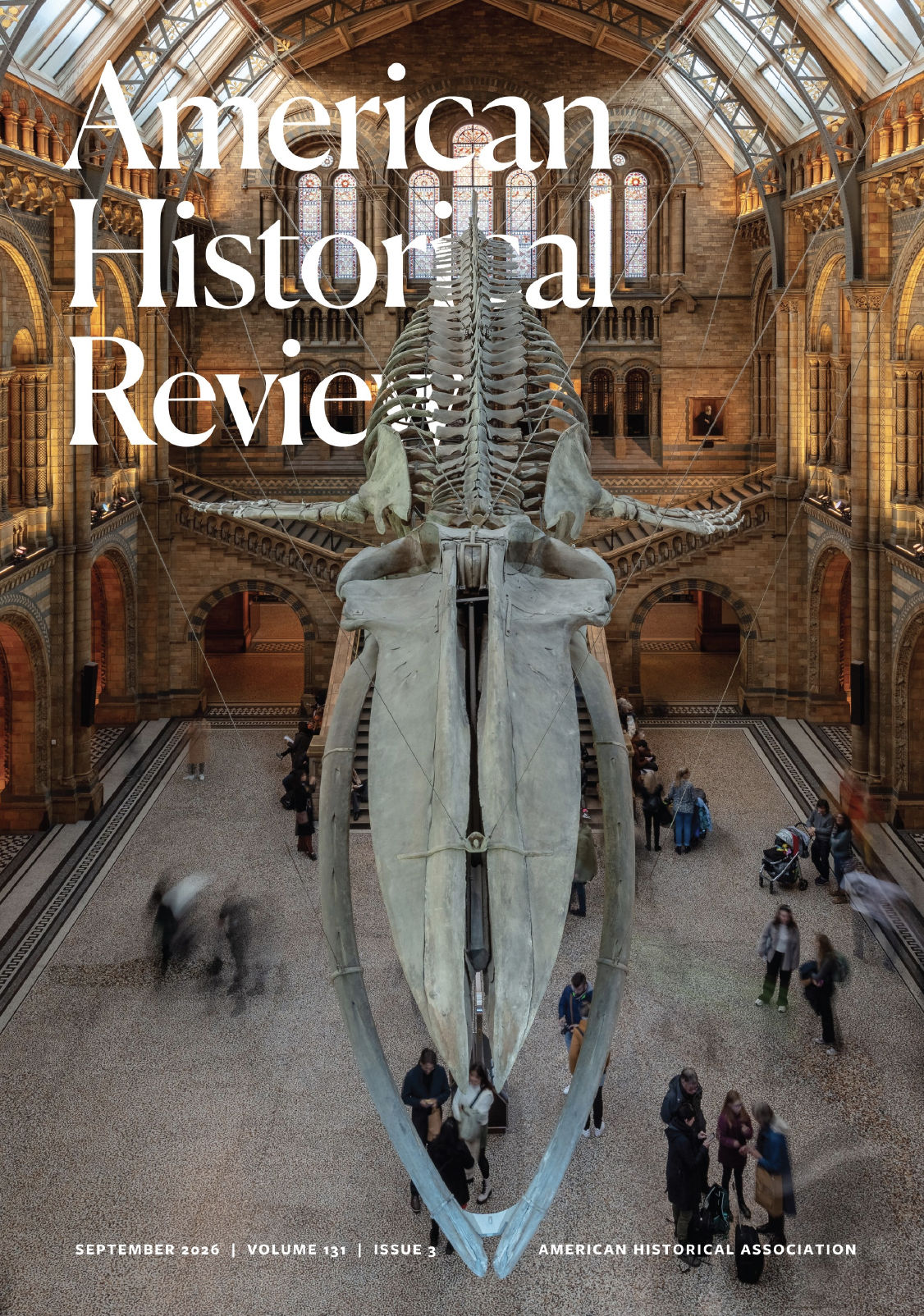
This collection started from an invitation from AHR Editor and fellow Vietnamologist Mark Bradley, who invited me to pitch an idea for a HistoryLab project. It took me about five seconds to pitch Reading Nature’s Archives which pretty much sums up my main interest and passion in academia: green thought. What is green thought? That’s a long one, but a short explanation is what Latour and Haraway describe as “material-semiotics” — in general, a greater awareness for the ways human life, dreams, politics and projects are interconnected with the material world–from quantum interactions to cellular metabolism, to ecosystem inter-relationships to cosmic relations.
There are a couple of things I’d like to highlight from the piece before getting to my contribution on intervisuality and reading conflict landscapes. First, I think the opening to the collection worked out well so I’ll include it here — why a new sort of history research, new kinds of archives?
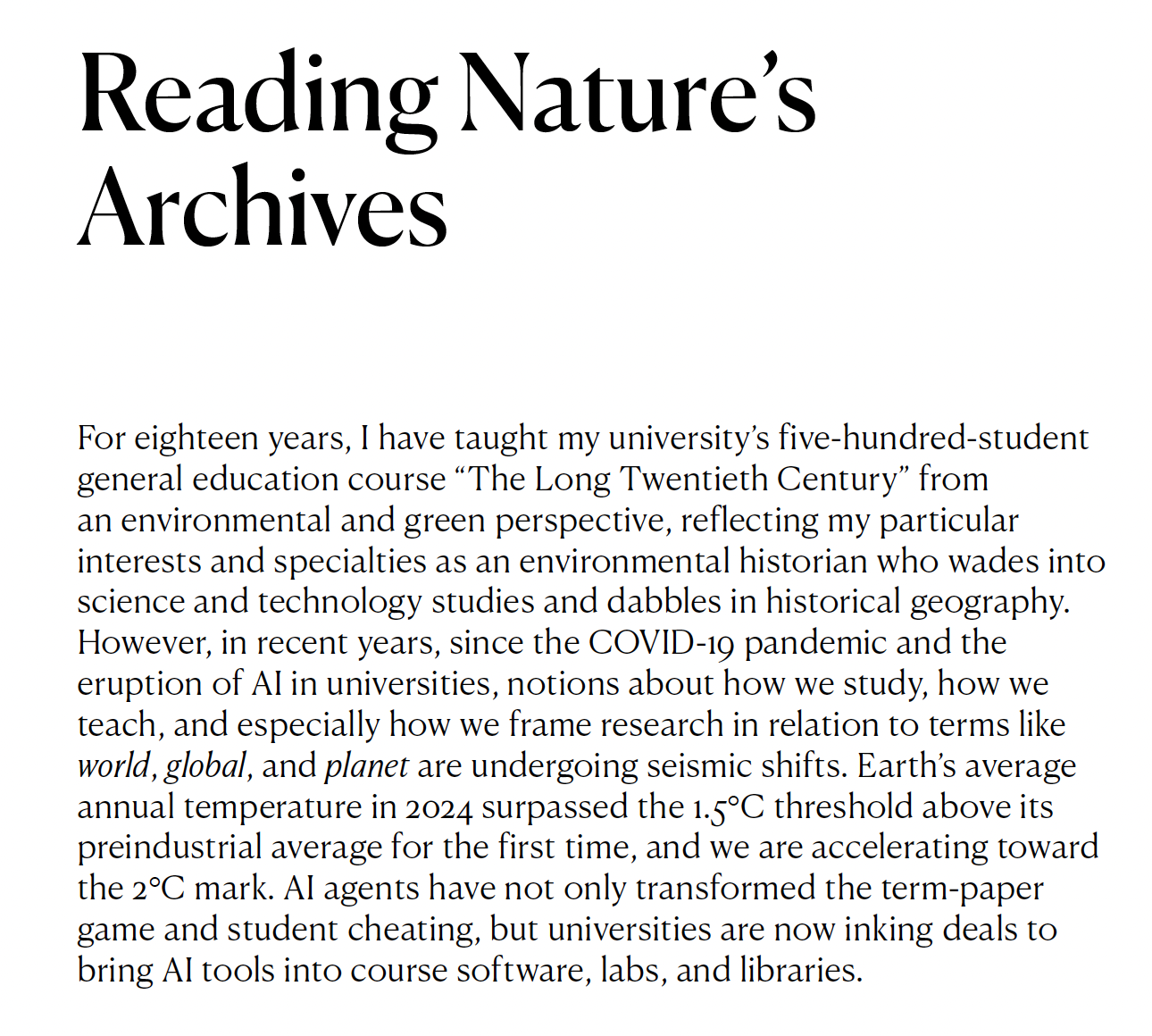
And I continue: “Many may be rightly concerned that the present moment is a crisis of colliding phenomena with long histories entangled in colonialism, revolutions, wars, and social movements; but the present moment is also a profound opportunity. Historians, students, and teachers alike are taking deep dives into questions like “What’s special about the human experience?” and “With all the recent scientific discoveries showing how our genes, our biology, and our futures are connected with industrial, geologic, and biological processes, how do we understand the human experience as it’s embedded in so many natural and industrial processes ranging from subatomic planes to the cosmos?” This spring, I took a di!erent tack with my gen-ed class. I renamed it “Planetary Consciousness,” and after raising big questions about planetary entanglement and showing clips of debates like Joe Rogan’s interview with Jensen Huang on AI and consciousness, I introduced into our coursework five-minute meditations, journaling, a collective read-in, and other experiential encounters that challenge students to roam the boundaries between what’s human—experience, feeling, consciousness—and what’s AI, digital, or even “planetary.” We tackled snippets of philosophy, and after the midterm, students wrote their own “planetary family histories” with a little help from novelist Imbolo Mbue, whose novel about multiple generations coping with tragedy in an oil-polluted African river delta is a planetary tragedy of operatic proportions.“
In short, I think what we need, as humans who are story-telling animals who use past experiences to make sense of the present and prepare for the future, are new stories that will inevitably draw from new archives.
I am also very happy with my piece in the collection “Reading Conflict Landscapes: Aerial Imagery, Ground-Truthing, and Intervisuality in Vietnam.” One thing I struggled with in my book Footprints of War was finding a way to show imagery — maps, air photos, etc. — in it’s full-resolution glory. Print books typically work wth images in the 10x15cm range at 600 dpi. It is very difficult to give readers access to a full-resolution, full-scale image. However, by using qr codes linked to images stored on this website, I am able to maintain the full-resolution images while the online and print versions of the journal use down-sampled images.
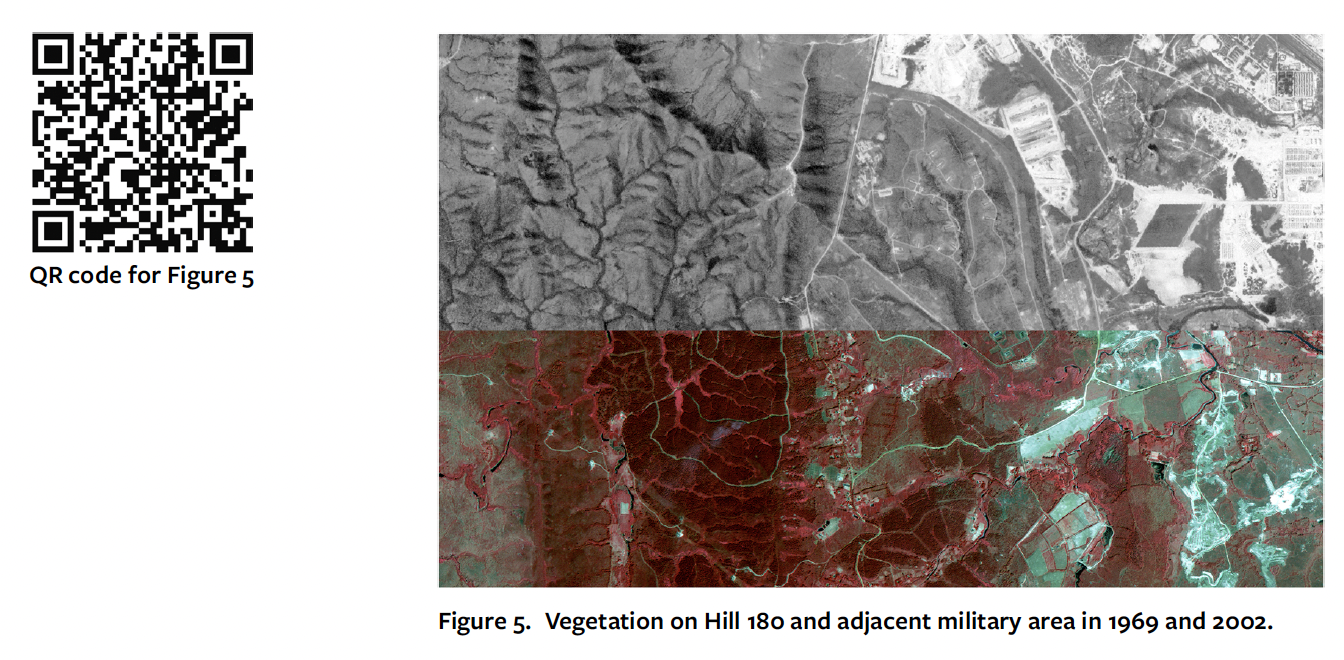
I am also able to include widgets like sliders that allow active intervisual comparisons! Academics: your personal website can directly support traditional print publications. This was a revelation to me.
The whole collection is fantastic, and I encourage visitors to this site to download the pdf and read them. It was tremendously fun coordinating and working with the contributors, and we had a great two-panel series at the recent AHA meeting in Chicago.